I started with a question that seemed simple enough to answer over coffee and a browser tab: Why are we going back to the moon?
The official answer is easy to find. NASA says Artemis is meant to return astronauts to the moon, establish a sustained human presence there, and prepare for later missions to Mars. Artemis II, the first crewed mission in the program, is currently targeted for Wednesday, April 1, at 6:24 p.m. EDT from Kennedy Space Center. Four astronauts are expected to fly around the moon and return on a mission lasting about 10 days.
That answered the calendar question.
It did not answer the real one.
Nobody commits this much money, time, hardware, political capital, and industrial effort simply because the moon is a challenge or an ego thing. Reuters reported this week that Artemis has cost more than $93 billion since 2012. Programs that large are never about one thing. They are coalitions of motives held together under one name.
So I went looking for the motive beneath the motive.
MORE FOR YOU
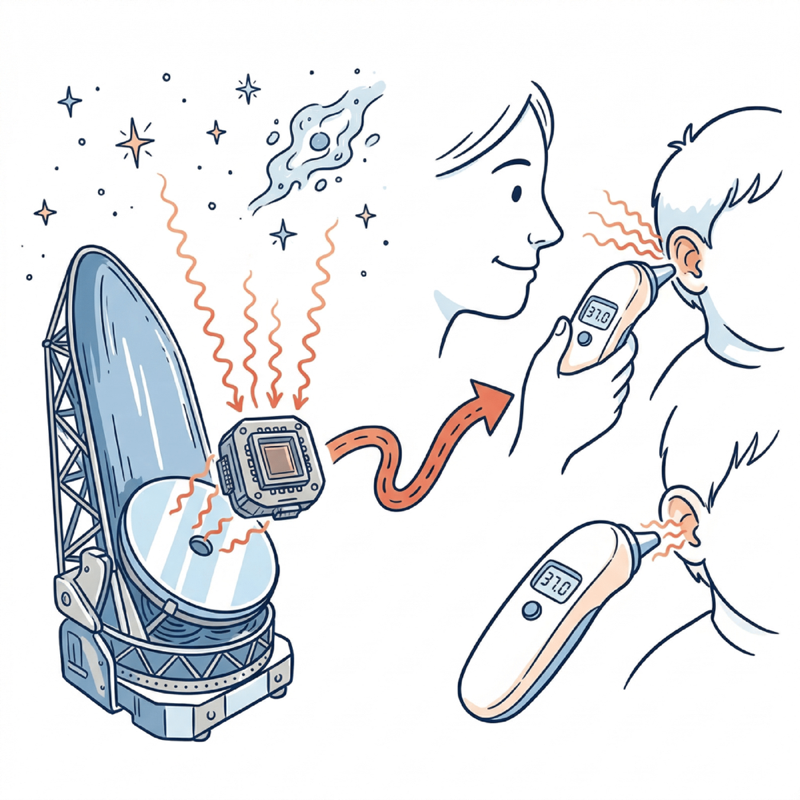
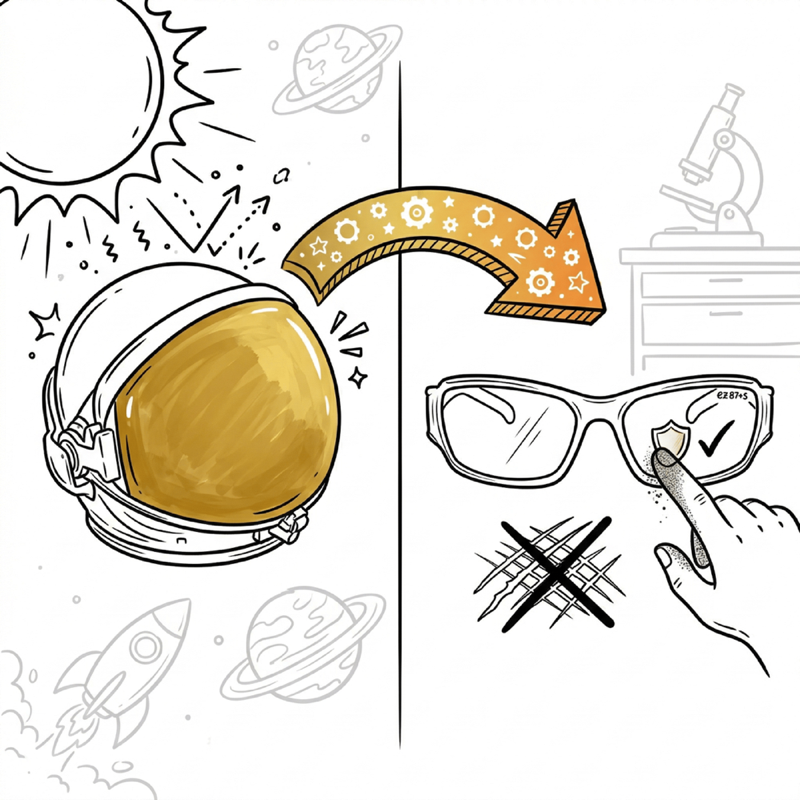
On the surface I found what we all know and learned in school — that the moon makes a very good public reason for financing harder, less romantic things. The phone camera, scratch-resistant glasses, the infrared ear thermometer used on your child, or an emergency blanket from a first-aid kit… NASA traced each of those to technology developed or accelerated by the demands of space. Its Spinoff program has documented more than 2,000 technologies adapted for life on Earth since 1976. That is the less sentimental case for space exploration: it does not just send rockets up. It forces useful technology down into everyday life faster.
Space exploration is usually narrated as curiosity at scale. There is truth in that, but curiosity alone does not carry a program through appropriations, procurement cycles, technical failures, redesigns, and election years. Large space programs survive because they serve interests that are much sturdier than wonder. They create capability. They create leverage. They create speed.
So, why are we still trying to go to the moon? It is less the end point and more the technological challenge.
If you want to accelerate robotics, remote operations, autonomous systems, power management, thermal control, life-support systems, materials, communications, and high-reliability manufacturing, deep-space missions are one way to do it. They force deadlines. They justify budgets. They create an environment where failure is expensive and iteration matters. What looks on television like a launch is, on the ground, a giant machine for compressing years of technical progress into shorter spans of time.
That is where “for the good of mankind” becomes less of a slogan and more of an economic mechanism.
Not because moon missions make people nobler.
Because they can make difficult technologies arrive faster.
So yes, we know the old list by now. But under this new push to the moon, something else is being built. NASA has been unusually direct about it.
In a technical paper on future exploration, the agency says it has used artificial intelligence “in three distinct ways to enable autonomous mission operations capabilities.” Those include crew autonomy, vehicle system management, and autonomous robots that can assist or stand in for humans. In NASA’s wording, one goal is to turn the spacecraft “into a robot,” so it can operate when astronauts are not present or reduce astronaut workload.
It is a proving ground for AI that has to function in places where human intervention is limited, expensive, or impossible.
That matters more on the moon than it does on Earth because space is slow, hostile, and far less forgiving. A delayed decision on Earth is usually inconvenient. A delayed decision in deep space can be mission-critical. NASA’s autonomy work is tied to exactly that problem: fewer crew, greater distance, longer communications gaps, and more systems that must diagnose, prioritize, and respond without waiting for Houston. That is part of what sits underneath Artemis and the broader lunar push. The moon is not only a destination. It is a proving ground for AI that has to function in places where human intervention is limited, expensive, or impossible.
What can that bring about in space that Earth often does not require?
- Spacecraft that manage parts of their own operations when astronauts are absent or overloaded
- Robotic assistants or proxies that can inspect, move, or explore before humans arrive
- Autonomous mission planning and execution in environments where communication delays and risk make constant human control impractical
- Lunar surface systems that learn, adapt, and keep functioning with less real-time help from Earth
If that lunar AI stack matures, the spillover on Earth is not hard to imagine. NASA says Artemis autonomous systems require the ability to operate without control from the crew or mission control, with independent reasoning, intrinsic monitoring, and rapid notification when necessary.
That combination points to a class of Earth technologies built for harsh, remote, safety-critical settings rather than consumer novelty.
- Self-managing vehicles and equipment in places where downtime is costly or dangerous, because NASA’s vehicle-system-management work is designed to let spacecraft diagnose issues and act with less human supervision. This can spillover path for heavy industry, shipping, mining, offshore energy, and defense systems.
- Remote robotic teams that can map, inspect, and coordinate in environments humans cannot easily enter. NASA’s CADRE moon mission is built around multiple autonomous robots exploring and collecting data with limited human input.
- Decision-support systems that remain useful when communications are degraded, where intervention from Earth is impossible. On Earth, that logic fits emergency operations, battlefield logistics, polar research, deep-sea work, and rural medical transport.
- More trustworthy industrial AI, since NASA’s autonomy documents emphasize visibility into decision processes and avoiding black-box behavior for mission-critical systems. That is the kind of requirement many regulated Earth industries still struggle to meet.

In other words, the moon may help push AI away from chatbots and toward something more consequential: machines that can reason, monitor, coordinate, and act reliably when conditions are hostile, bandwidth is thin, and failure carries a real cost. That is a much more believable answer to what space exploration might bring back down to Earth next.
The technical bottleneck we see today on Earth can be rapidly solved in Space. Funding, necessity, speed.
A country that can build credible deep-space systems is also building talent, industrial depth, alliances, standards, and technologies that do not stay confined to launch pads. They come back down into medicine, logistics, computing, manufacturing, sensors, energy systems, communications, warfare and defense-adjacent industries. The moon may be the destination on paper. In practice, it is also a forcing function for everything built along the way.