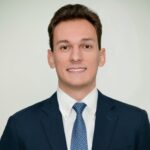
Ben Zion (Ben) Suky was just 16 when he moved from Israel to New York to join his family’s business. What began as an opportunity to learn how a business operates eventually developed into a career spanning real estate investment, acquisitions, development, and financing.
In 2009, he founded Bensco LLC, a New York-based real estate investment and development firm focused primarily on residential and mixed-use properties. Since then, the company has expanded its activities across New York and Miami, building a portfolio that includes hundreds of residential units in Manhattan, Brooklyn, and Queens, along with significant retail holdings.
Suky’s approach to real estate has been shaped by years of working directly with properties, lenders, brokers, and operating partners. Rather than pursuing expansion for its own sake, he emphasizes knowing the market, understanding what a property actually needs, and making investment decisions that can hold up over time.
In this Executive Spotlight, Suky discusses his early career, the evolution of Bensco, and what experience has taught him about building a lasting real estate business.
Q&A With Ben Suky
Q
You moved from Israel to New York when you were only 16 and began working in your family’s business. How did that experience shape your career?
A
Ben Suky: I learned about business much earlier than I expected. When I came to New York, I joined the family business, and I was given responsibilities at a young age. It was a very practical education. You were dealing with people, handling day-to-day problems, making decisions, and learning very quickly that things don’t always go according to plan.
Looking back, I think that experience gave me a good foundation. I learned that running a business requires a lot more than having a good idea. You need to understand the operation, the people involved, and all the small things that can affect whether something succeeds.
New York also had a big influence on me. I was fascinated by the city, especially Manhattan, the buildings, and the scale of business taking place around me. Real estate gradually became something I wanted to pursue for myself.
Q
What led you from the family business into real estate investing, and eventually to establishing Bensco in 2009?
A
Ben Suky: I was always interested in building something of my own. By the early 2000s, I had started exploring real estate opportunities, initially looking at condominiums, apartments, and multifamily properties.
I liked the fact that real estate combines business, finance, and something very tangible. You can look at a building, understand how it is being used, and begin to see where it might have more potential. But you also have to understand the numbers and what it will actually take to make the investment work.
When I established Bensco in 2009, I wanted to create a business that could grow beyond individual transactions. I didn’t want to be limited to one type of property or one particular approach. Over the years, we became more involved in multifamily and mixed-use buildings, larger acquisitions, financing, and the ongoing management of our properties.
The company has changed quite a bit since those early days, but the basic approach hasn’t changed that much. We’re interested in properties where we understand the opportunity and believe we can do something meaningful with them.
Q
Bensco has grown into a firm with a substantial New York portfolio. What do you think has been most important to that growth?
A
Ben Suky: A large part of it comes down to experience and relationships. In New York, there are always opportunities, but there are also plenty of deals that look attractive until you start examining them closely.
Over the years, we’ve developed relationships with banks, brokers, lenders, property owners, and other people throughout the industry. Many of the opportunities we look at come through those relationships rather than through publicly marketed listings.
That kind of network takes time to build. People need to know that you understand what you’re doing, that you can evaluate a situation properly, and that you will follow through on your commitments.
I also think we’ve benefited from staying close to the actual business of owning and operating real estate. It’s important to understand financing and acquisitions, of course, but after you buy a building, you still have to manage it. The daily work doesn’t disappear once the transaction is completed. If anything, that’s when much of the real work begins.
Q
Beyond acquiring and developing real estate, you’ve also been involved in arranging substantial financing transactions. In July 2026, you were credited with arranging the $226.5 million refinancing of Metro Parc in Florida. How important is this side of the business, and what does it take to secure financing for large real estate projects?
A
Ben Suky: Financing has always been a very important part of real estate, and over the years I’ve developed strong relationships with banks, private lenders, investors, and other financial institutions.
A good property doesn’t automatically mean you have a good deal. You need to make sure the financing works as well. That means understanding the asset, the business plan, the risks involved, and finding the right financial partners.
Metro Parc was a significant transaction, involving $226.5 million in refinancing for a large residential development in Hialeah. I was involved in arranging that financing, which brought together different sources of capital.
What I’ve learned is that relationships make a real difference in this business. When people know you, trust your judgment, and have worked with you over many years, it can open doors that might otherwise be difficult to access.
But those relationships are only part of it. You still need to present a solid deal and understand what the lenders are looking for. Every project is different, and financing has to reflect the specific needs of the property.
For me, being able to connect real estate opportunities with the right capital is an important part of what we do.
Q
When you evaluate a property, what makes you believe there is an opportunity that other investors may be overlooking?
A
Ben Suky: Usually, I want to understand why the property is not performing as well as it could. Sometimes the problem is the condition of the building. Sometimes it’s the management, the financing, or the way the property is positioned in its neighborhood.
There are buildings with very good fundamentals that simply haven’t been managed or maintained properly. But you need to be careful because not every underperforming building is a good opportunity. Some problems are much more expensive to solve than they first appear.
We spend time understanding the physical condition of the property, the tenant base, the operating expenses, and the local market. I’m also interested in what might improve the property without making unnecessary investments.
A major renovation is not always the answer. Sometimes better management, changes to leasing, or relatively targeted improvements can make a significant difference. In other cases, you really do need to invest heavily in the building.
The important thing is to understand what you’re buying and have a realistic plan for it. If the investment only works because you’re assuming everything will go perfectly, I would be very cautious.
Q
One example in Bensco’s portfolio is Tempo, the approximately 200-unit residential property on West 73rd Street. How does that project reflect your approach?
A
Ben Suky: We acquired Tempo in 2023. It’s a substantial residential property in Manhattan, and when we looked at it, we saw an opportunity to improve a building that had not been performing to its full potential.
With a property of that size, the opportunity goes beyond the physical building. You’re looking at how it’s being operated, what kind of improvements are needed, and how to make it a better residential property over the long term.
One of the things people sometimes underestimate about repositioning an existing building is that the work takes place while the property still needs to function. Residents are living there, maintenance has to continue, and decisions about improvements have to be made alongside the daily requirements of running the building.
You also have to decide where to invest. Not everything needs to be replaced or upgraded simply because you’re taking over a property. The objective is to improve the building in ways that make sense for the residents and for the investment.
For me, that is an important part of what Bensco does. We’re not simply looking to acquire properties. We want to understand how they can be operated and positioned better.
Q
New York real estate is a very local business. How much does knowledge of individual neighborhoods influence your investment decisions?
A
Ben Suky: A great deal. New York is one city, but every neighborhood has its own character, and even two buildings a few blocks apart can behave very differently.
You can study the financial information and market reports, and obviously those are important. But they don’t tell you everything. You also need to understand the street, the residents, the local businesses, and how an area is changing.
I like to look at what is actually happening around a property. What kind of retail is working? Who is moving into the neighborhood? Are buildings being maintained? What are tenants looking for, and how has that changed over the years?
We work across Manhattan, Brooklyn, and Queens, and you can’t approach all of those locations in exactly the same way. An improvement that makes sense in one neighborhood may not be worth doing in another.
That local knowledge becomes particularly valuable when you’re looking at an older property. The goal isn’t necessarily to turn every building into something completely different. Sometimes it’s about understanding what is already working, what needs to change, and what the neighborhood can realistically support.
Q
Bensco is also active in Miami. How do you approach those two markets differently?
A
Ben Suky: New York has always been our main market, and it’s where I’m most directly involved in operations. Much of our business here is based on residential and mixed-use properties that we acquire, improve, and hold for the long term.
Miami offers a different set of opportunities. Our activity there has been more focused on development and selective sales, often working with people who have strong local knowledge and experience.
I don’t believe you should take a business model that works in one market and assume it will work exactly the same way somewhere else. The financing environment, the properties, the buyers, and the operating considerations can all be different.
What carries over is the way we evaluate opportunities. We still want to understand the asset, the people involved, and the risks before making a commitment.
There are opportunities in both markets, but that doesn’t mean we need to pursue all of them. I would rather be selective and do something properly than expand simply because a market is attracting attention.
Q
You’ve experienced different market cycles, including periods when financing has become much more difficult. What have those years taught you about making good investment decisions?
A
Ben Suky: Probably to be more patient, especially when something looks very attractive at first.
I’ve learned that you have to pay attention to what can go wrong, not only what you expect to go right. Financing is a big part of that. A building may look like an excellent investment based on its location or potential rental income, but if the financing structure doesn’t make sense, the entire investment can become much more difficult.
The same applies to renovation costs, operating expenses, and the time it takes to improve a property. Those things have a way of changing, sometimes significantly.
I’m also much more careful about the people I work with. Good partners can make a complicated project manageable, and the wrong partners can create problems even when the underlying investment is sound. That’s something you learn through experience.
You can’t avoid every mistake. I’ve certainly learned from situations I would approach differently today. But those experiences help you become more disciplined. I don’t believe in building an investment strategy around the hope that the market will solve your problems for you.
Q
Looking ahead, how do you see Bensco evolving, and what would you like the company to be known for?
A
Ben Suky: I think there will continue to be interesting opportunities in New York, especially with properties that need investment, better management, or a different approach. We are always evaluating opportunities, including situations where lenders or existing owners are looking for someone with the experience to take on a more complicated asset.
We’re also open to other sectors, including office and hospitality, where a particular opportunity makes sense. But I don’t see diversification or expansion as goals in themselves.
I’ve spent more than twenty years in this business, and one thing I have learned is that the quality of your decisions matters much more than the number of deals you complete. I want Bensco to continue growing, but in a way that makes sense for the company and the people we work with.
I also think about what we’re leaving behind. When you own residential buildings, you’re responsible for properties where people live their lives. Improving a building and managing it properly has a real impact beyond the financial side of the investment.
If people know Bensco as a company that understands its business, keeps its commitments, and takes a long-term approach to what it builds and manages, that is something I would be very proud of.
Follow Ben’s Journey
Who Is Ben Suky?
Ben Zion (Ben) Suky is a New York-based real estate entrepreneur, investor, and the founder and CEO of Bensco LLC, a real estate investment and development firm established in 2009.
Born and raised in Israel, Suky moved to the United States at the age of 16, beginning his professional career in his family’s business before pursuing independent real estate investment in the early 2000s.
With more than two decades of experience, his work spans residential, commercial, and mixed-use properties, including acquisitions, development, financing, and long-term asset management. Under his leadership, Bensco has developed a substantial portfolio across New York, with additional investment activity in Miami.
Beyond real estate, Suky supports charitable and community organizations in New York and Israel, including Hatzalah, BeLev Echad, and the Israeli-American Council.
About Ben Suky
CEO at Bensco LLC.
Ben Suky is a New York-based real estate entrepreneur and founder and CEO of Bensco LLC. With over two decades of experience, he focuses on real estate investment, development and financing in NY.